The Decloak Journal
Security news &
platform updates.
Stories from around the web security world, plus release notes and changes to Decloak itself.
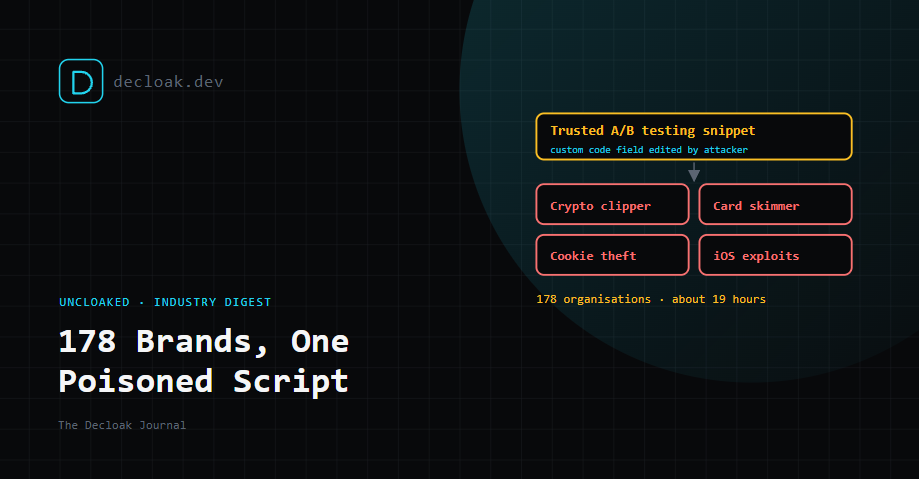
Uncloaked: The Optimizely Attack Hit 178 Organisations That Didn't Change a Line of Their Own Code
For about 19 hours, malicious code delivered through the Optimizely A/B testing platform skimmed cards, swapped crypto wallet addresses and targeted iPhones on some of the world's biggest websites. Here's how it worked, what an outside scan would and wouldn't have seen, what we're planning, and the rest of a week that also brought a bank outage and a credit union breach.
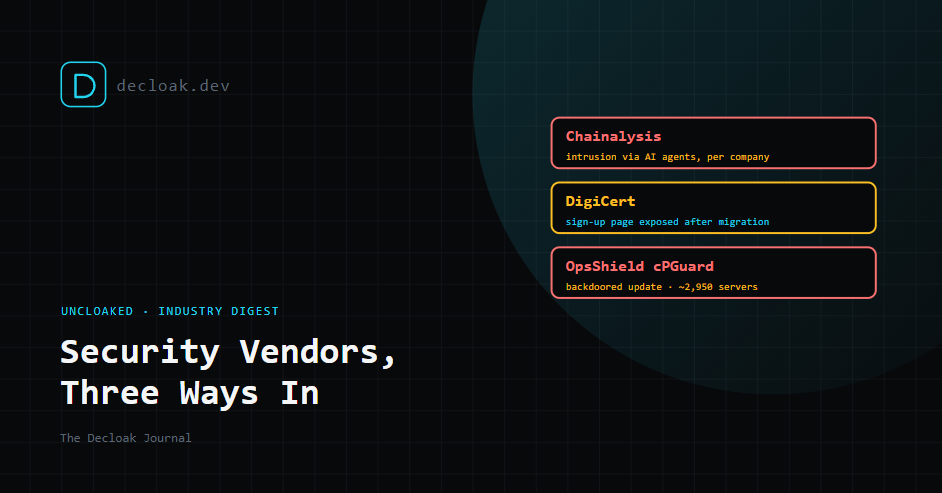
Uncloaked: Three Security Companies, Three Ways In, One Uncomfortable Fortnight
A blockchain intelligence firm hit by an AI-assisted intrusion, a certificate authority exposed by a forgotten sign-up page, and a server security product that shipped a backdoor through its own update channel. None of the three was exotic. Here's what happened, and what the rest of us can take from it.
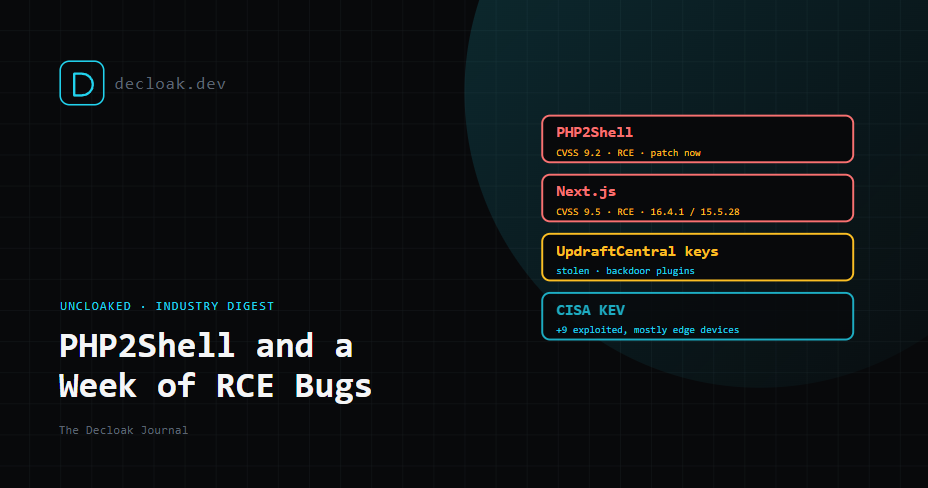
Uncloaked: PHP2Shell Leaked a Day Early, and It Wasn't the Only Remote Code Execution Bug This Week
Two critical PHP flaws leaked before their patch, and exploitation attempts started before the fix shipped. The same week brought two Next.js remote code execution bugs, stolen WordPress management keys, and another run of exploited edge devices. Here is what happened and what to check.
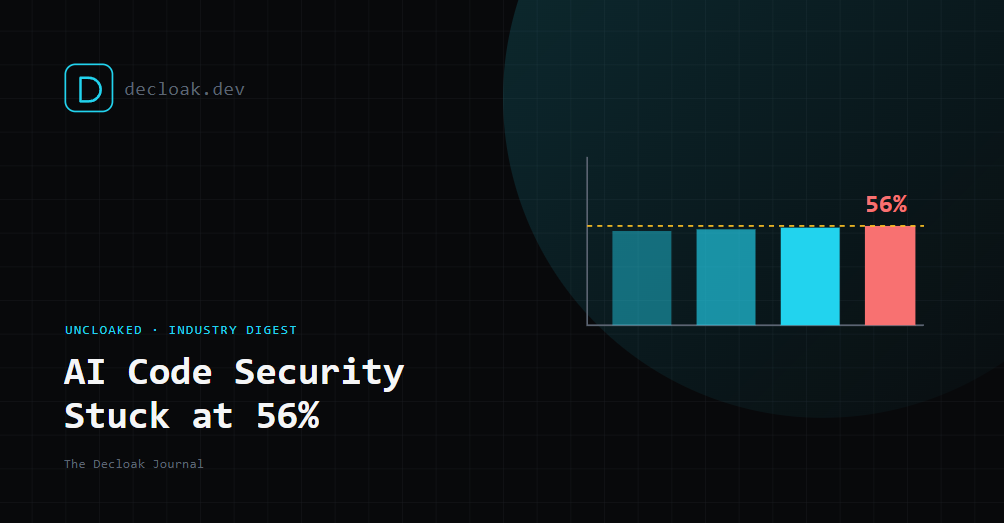
Uncloaked: AI Code Security Has Barely Moved in a Year, and Veracode Has the Numbers
Veracode tracked more than 100 AI models and found the average security pass rate is 56%, up one point from 55%. Models write code that compiles almost every time. They still fail on security in nearly half of tasks. Here is what the report found, what it doesn't prove, and what to do about it.
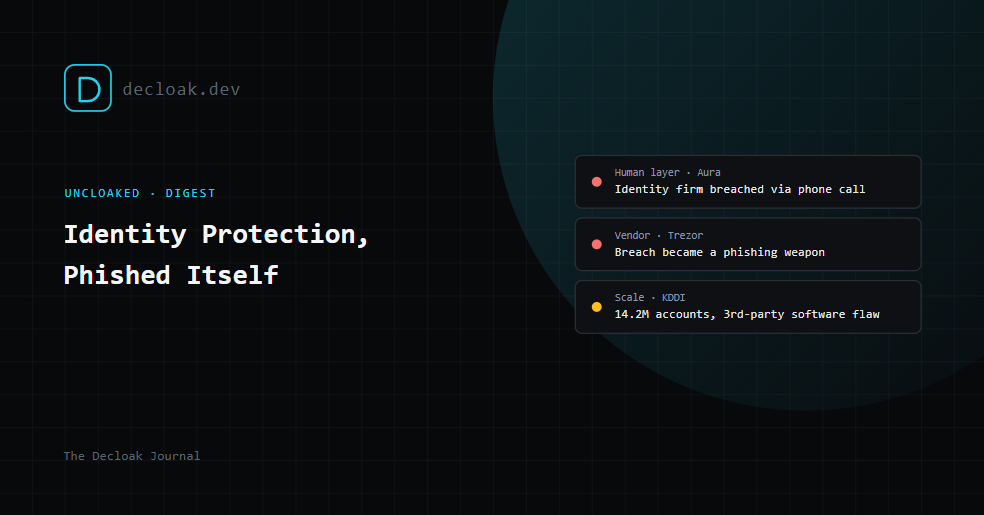
Uncloaked: When the Company Selling Identity Protection Gets Phished Itself
Three recent stories: an identity-theft protection company breached via a voice phishing call to one employee, a hardware wallet maker whose own customers got targeted with fake security-alert emails after a vendor breach, and a telecom breach that exposed 14 million email addresses through a third-party software flaw.
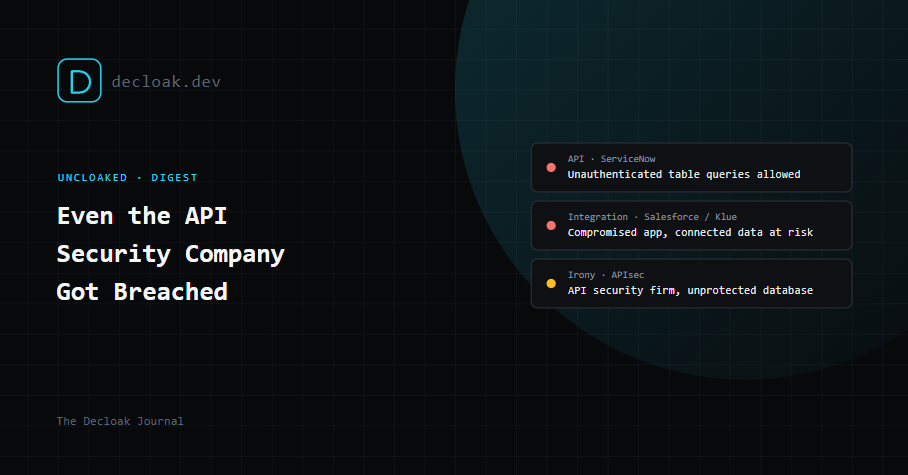
Uncloaked: Even an API Security Testing Company Got Breached by an Unprotected Database
Three recent stories, all API-shaped: a ServiceNow access-control gap that let unauthenticated queries pull customer instance data, a compromised third-party app that gave attackers a path into Salesforce customer connections, and an API security testing firm exposed by exactly the kind of unprotected database it tests for.
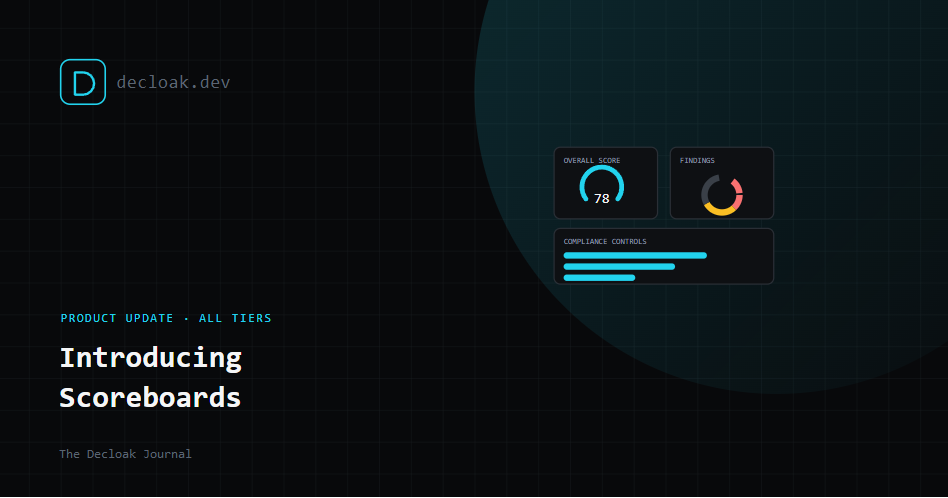
Introducing Scoreboards: A Real Dashboard for Every Domain You're Watching
Your account now opens to an actual command center instead of a list of scans, aggregate posture across every domain you monitor, plus a dedicated scoreboard for each one. Live for every account, free included.
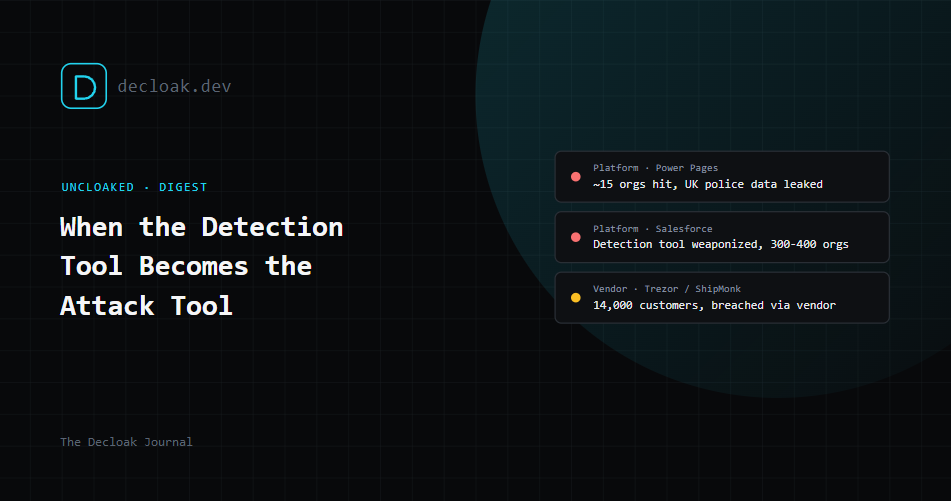
Uncloaked: A Weaponized Detection Tool, a Government Contact Leak, and Another Vendor Breach
Three recent stories, all misconfiguration rather than a hack: a data-extortion group hitting Microsoft Power Pages across roughly 15 organisations, a Salesforce campaign that turned a misconfiguration-detection tool into an attack tool, and a hardware wallet company breached through its shipping provider.
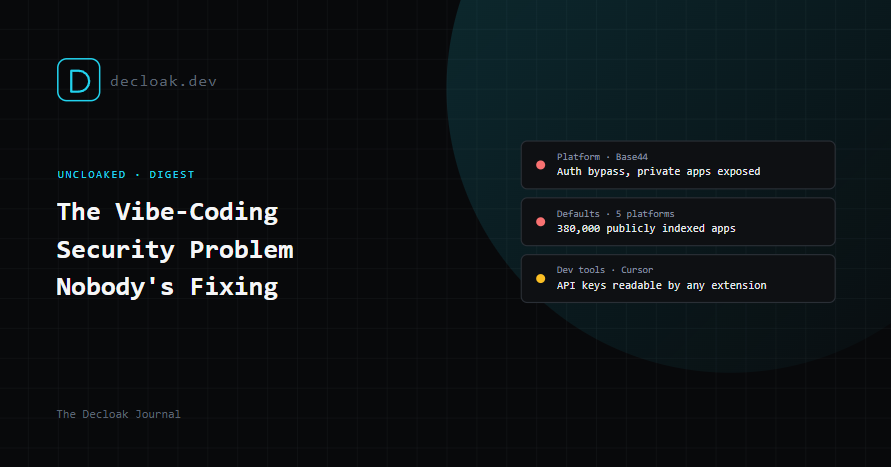
Uncloaked: 380,000 Exposed Apps and the Vibe-Coding Security Problem Nobody's Fixing
Five recent stories, all about the same underlying pattern: apps built by describing them in plain English, shipped fast, and left with security defaults nobody thought to check. A Base44 auth bypass, 380,000 publicly indexed AI-built apps, and a backdoor hiding inside AI coding rules themselves.
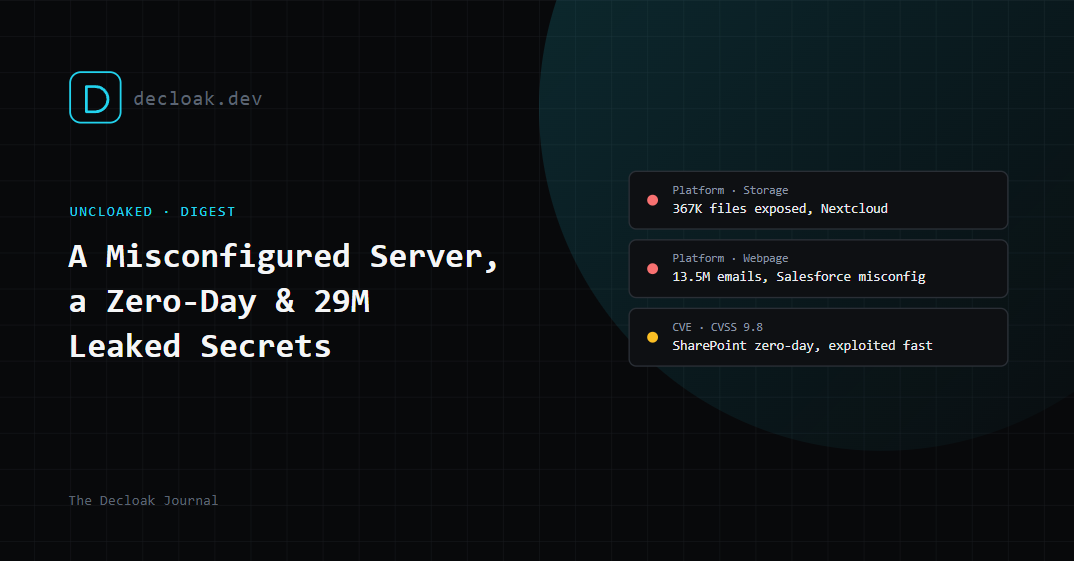
Uncloaked: A Misconfigured Cloud Server, a SharePoint Zero-Day, and 29 Million Leaked Secrets
Four stories from the last few weeks: a Nextcloud misconfiguration that exposed 367,000 files, a Salesforce webpage misconfiguration behind a 13.5-million-record breach, an actively exploited SharePoint zero-day, and the year's secrets sprawl numbers.
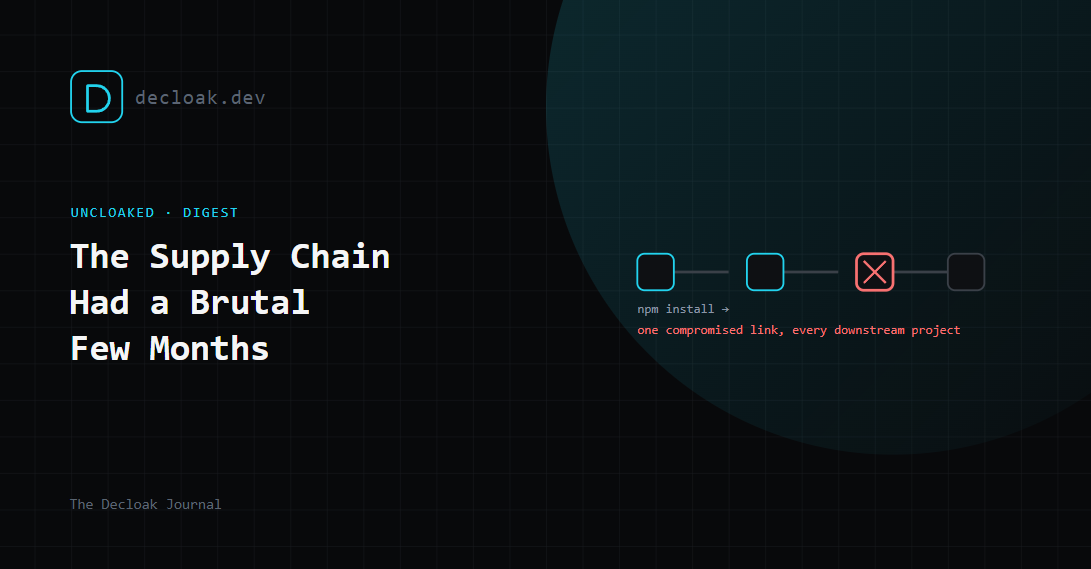
Uncloaked: The Software Supply Chain Had a Brutal Few Months (And It's Not Over)
Four npm supply chain compromises in four months, including a 100-million-download HTTP client, plus a subdomain takeover disclosed against Anthropic itself. What each incident shares, and what it means for a site you didn't think was affected.
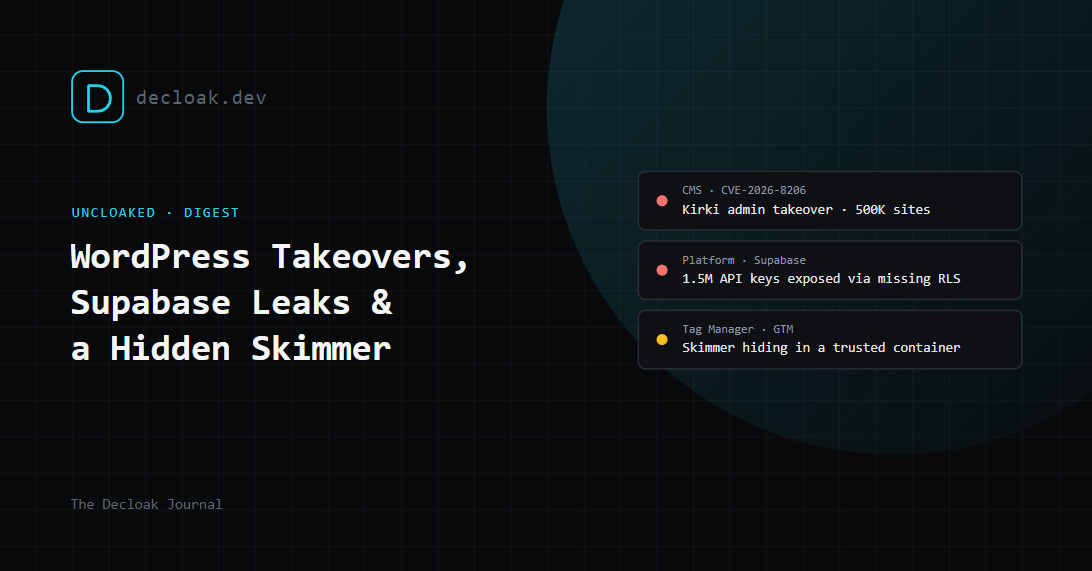
Uncloaked: WordPress Takeovers, Supabase Leaks, and a Skimmer Hiding in Plain Sight
Five real security stories from the last few months, all touching attack surfaces Decloak scans for: a plugin flaw hitting 500,000 WordPress sites, a Supabase misconfiguration that exposed 1.5 million API keys, and a card skimmer hiding inside Google Tag Manager.